

Adventure games are strange. They are slow-paced. Often, they are awkward or difficult to control.
Half the time, you are simply moving somewhere to click on something. Yet, no other genre has given us the kind of memories these games have.
We’ve been hunched over the home PC playing these games since childhood, and even today, when a puzzle finally clicks, we feel that same thrill.
So, here is a list of the best adventure games ever made, spanning three decades and a wide variety of titles, including at least one game that left us staring at the wall for twenty minutes after the credits rolled.
Without any further ado, let’s get started.
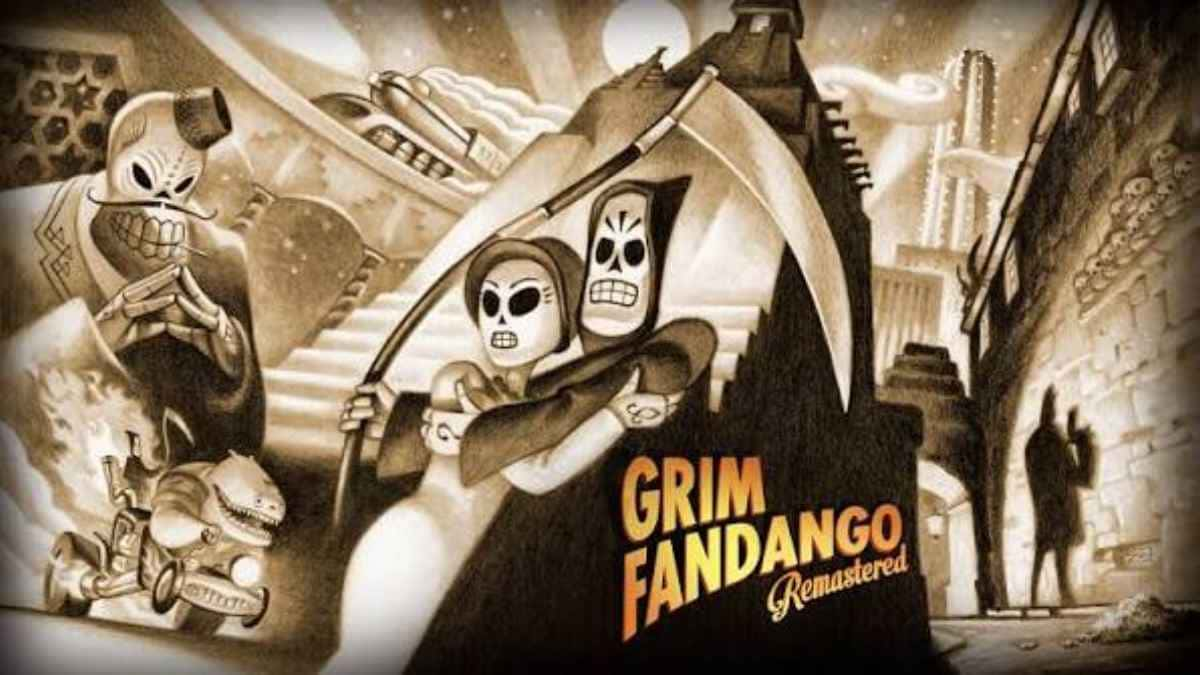
#1 Grim Fandango (1998)
It frequently tops lists of the “greatest adventure games of all time,” and honestly, we agree.
Tim Schafer created something here that really shouldn’t have worked: a noir detective story set in the ‘Land of the Dead’ that employs Aztec and Mexican folk art for its visual style, and the result is absolutely stunning.
You play as Manny Calavera, a travel agent in the afterlife with a poor sales record and a habit of complaining.
The case of a missing client gradually unravels into a massive conspiracy spanning four years. The dialogue is superb, and the game world feels truly lived-in. Its ending is genuinely bittersweet, a rarity in games.
The original tank controls are quite difficult.
Play the 2015 remaster instead; the story is the same, but the frustration is significantly reduced.
#2 The Secret of Monkey Island (1990)
“Hi, my name is Guybrush Threepwood, and I want to be a pirate.”
That line has probably been quoted more than any other in adventure game history. Ron Gilbert’s pirate comedy didn’t invent the genre, but it perfected it.
The insult sword-fighting. The three trials. The rubber chicken with a pulley in the middle.
Here’s the thing people forget: LucasArts made a design decision with this game that shaped everything after it. You couldn’t die. You couldn’t get permanently stuck.
That sounds minor now, but in 1990 it was a quiet revolution. It meant players could relax and just enjoy the story.
Still funny, playable, and worth your time.
#3 Myst (1993)
‘Myst’ is the most controversial game on this list, and we have no problem with that.
It remained the best-selling PC game for nearly a decade and helped convince the world that CD-ROMs were more than just a gimmick.
However, it also spawned hundreds of cheap imitators that tarnished the reputation of “adventure games” for years.
The game Myst isn’t really about puzzles; it is about solitude. You are left on an island with no gear, no map, and no clear objective just you and the sound of the ocean.
Solving puzzles unlocks various “Ages,” each stranger than the last, and the story is told almost entirely through the surrounding environment and atmosphere.
If you like being guided, skip this. If you like getting lost, this game is for you.
#4 Disco Elysium (2019)
Disco Elysium is the video game with the best story of all time. Not one of the best, but the absolute best.
You wake up in a trashed hostel room. No pants, memory, and idea who you are. You’re a detective, apparently. There’s a murder to solve, a labor dispute tearing the city apart, and a voice in your head that keeps suggesting terrible ideas.
The writing is profound, political, humorous, and poignant. There is no fighting or brawling. There is no crafting, nor any pointless running around. It is simply about talking to people and deciding who you want to become.
Some games feel like products. This game feels like a novel over which a shadow has been cast.
#5 The Walking Dead: Season One (2012)
Telltale’s zombie drama doesn’t get much attention these days because the studio overused the formula, making it feel stale. But the first season? At the time, it offered an experience unlike anything else.
You’re Lee Everett, a man with a murder conviction and a kid named Clementine to protect.
The game doesn’t care if you’re good at puzzles. It cares about the nine seconds you have to decide who gets pulled off the fence.
The illusion of choice was part of the trick; your decisions mostly funneled toward the same beats. But the feeling of those choices was real.
And that last episode still hits like a truck.
#6 The Last of Us (2013)
Purists would say that this isn’t an adventure game. We believe it is the finest example of the genre: a long, perilous journey, two characters, and a world that wants to destroy them.
Joel is a smuggler. Ellie is the cargo. You’ve heard that setup before. What you haven’t seen, at least not before 2013, is that relationship handled with this much restraint.
The game trusts silence. It trusts small moments. A joke book. A giraffe. An ending that refuses to let you feel good about yourself.
Naughty Dog took the fundamental framework of this genre and backed it with a substantial budget. The result was something that transformed people’s expectations of games.
#7 Outer Wilds (2019)
We can’t explain why this game is good without spoiling it. So I’ll say this instead: you have 22 minutes before the sun explodes. Then you wake up. Again.
Nothing carries over between loops. No upgrades, items, or levels. The only thing that changes is what’s in your head. You solve Outer Wilds by learning, by remembering, by caring enough to pay attention.
It’s the rare game that respects your intelligence completely. No waypoints. No quest markers. Just a mystery, a solar system, and as much time as you need. If you’ve ever wanted a game that trusts you, this is it.
#8 Day of the Tentacle (1993)
Schafer and Grossman followed up Maniac Mansion with a time-travel comedy about three friends, one mutated purple tentacle, and a plot to take over the world. It’s the funniest game LucasArts ever shipped.
The hook is that all three characters exist in different time periods simultaneously. Send an item to the past, have it appear in the present, and use it to fix something in the future.
The puzzle design is genuinely clever, not just goofy, and the cartoon art has aged far better than most games from that era.
The 2016 remaster added a commentary track. Listen to it. It’s a masterclass in adventure game design.
#9 Broken Sword: The Shadow of the Templars (1996)
The game opens with a scene in a Parisian café where a clown explodes. That sets the tone for the game: intrigue, history, a touch of the bizarre, and plenty of charm.
You’re George Stobbart, an American tourist who just wanted a coffee. Now he’s chasing a Templar conspiracy across Europe with a journalist named Nico at his side.
The puzzles are fair. The pacing is tight. The voice acting is genuinely good, which was rare for 1996.
The 2024 “Reforged” version cleaned it up for modern systems. Worth checking out if you missed it the first time.
#10 Syberia (2002)
This one’s slow, mean, really slow. You walk look at things, and walk some more. Benoît Sokal’s world is full of clockwork trains and frozen villages, and it wants you to take your time.
Kate Walker is a lawyer sent to handle a factory sale. By the end, she’s abandoned her entire life to find a man named Hans who may or may not exist. The game never rushes that transformation.
It lets it happen quietly, in the spaces between conversations.
If you need action, look elsewhere. If you want atmosphere, this is one of the best.
#11 The Longest Journey (1999)
The Longest Journey was absurdly ambitious for its time. Stark is a cyberpunk city. Arcadia is a magical realm. April Ryan moves between them, and the game treats both with the same seriousness.
The writing is mature in a way that games rarely attempted back then: politics, religion, identity, all of it.
It feels dated in some places. Its interface is also a bit odd. However, its story remains compelling, and April stands out as one of the best protagonists in this genre.
#12 What Remains of Edith Finch (2017)
Two hours. That’s all the time it takes. Two hours, and you’ll remember it for years.
You walk through the Finch family home, discovering how each relative died. Every death is told through a different mechanism: a bath toy, a camera, a cannery conveyor belt. None of them repeat. None of them feel gimmicky.
It’s a game about grief that never once feels manipulative. That’s harder to pull off than it sounds.
#13 Life is Strange (2015)
A time-travel teen drama. On paper, the idea sounds like it wouldn’t work. But somehow, it does.
Max can rewind. She uses that power to navigate high school, a missing-person case, and a friendship that becomes the emotional center of the whole thing.
The dialogue is occasionally cringey yes, “hella” is said but the game means well, and the big moments land.
The ending of Episode 3. The reveal in Episode 4. The choice in Episode 5. You will find out about these when you get there.
#14 Full Throttle (1995)
The game is short, loud, and perfect.
Ben Throttle runs a biker gang. He gets framed for murder, is left on the side of the road, and has to fight his way back.
That’s it. That’s the plot.
But the execution is so confident, so stylish, that it sticks with you longer than games three times its length.
Its soundtrack. Its voice acting. The fact that it wraps up in six hours without wasting a single minute. LucasArts at its absolute best.
#15 Return of the Obra Dinn (2018)
Lucas Pope made Papers, Please. Then he made this. Both are about bureaucracy and death. Both are brilliant.
You’re an insurance investigator on a ship where everyone is dead. A pocket watch shows you their final moments. Your job: figure out who each person was and how they died.
No hints. No checklists. Just deduction. When you get a set of three right, the game confirms it, but if you’re wrong, it says nothing. It respects you enough to let you be wrong.
Final Thoughts
The best adventure games don’t all look the same.
Some are funny and bleak.
Some are slow burns; some hit you in two hours. What they share is a willingness to put story first and trust the player to keep up.
Start anywhere on this list. You won’t regret it.


